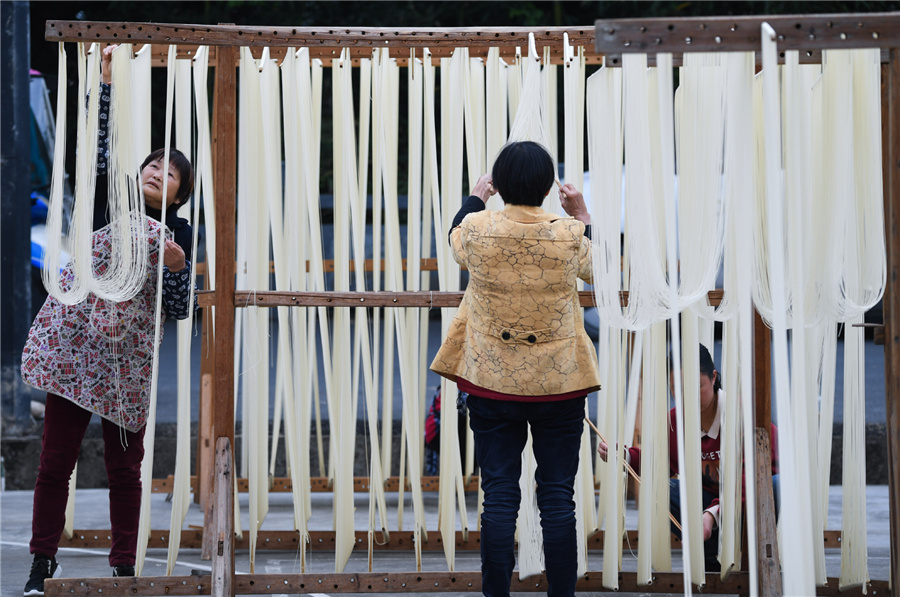
Longevity Noodles
Overview
Longevity noodles, known for their exceptional length, are a unique culinary tradition celebrated in various parts of China, especially during significant occasions such as birthdays and festivals. These noodles symbolize long life and prosperity, a belief deeply embedded in Chinese culture. The tradition of serving longevity noodles is prevalent across many regions, each adding its own twist to the preparation and presentation of these noodles.
Cultural Significance
Longevity noodles are not merely a dish but a cultural symbol representing the wish for a long and prosperous life. In Chinese tradition, the length of the noodle is directly associated with the length of the consumer's life, making it an essential part of birthday celebrations, especially for the elderly. The concept is simple yet profound—cutting the noodles is considered bad luck as it might symbolically shorten one's life.
Regional Variations
In Weishan, Dali, Yunnan province, longevity noodles are a highlight among the hundreds of local snacks. The extraordinary feature of these noodles is their length; a single noodle is long enough to serve as many as 1,000 people. This practice not only showcases culinary skills but also emphasizes the communal aspect of dining, as many people share from a single noodle, reinforcing social bonds.
In Lanzhou, Gansu province, a variant known as Lanzhou beef noodles is sometimes referred to as "longevity noodles" These noodles are classified into more than ten types based on thickness, catering to different age groups. The thinner noodles are particularly associated with longevity, as they are easier for older individuals to chew, making them popular among the elderly who consume them as a regular part of their diet.
Preparation and Ingredients
The preparation of longevity noodles requires skill and precision. The dough is made from high-quality flour and water, kneaded to perfection to achieve the right texture that allows it to stretch to considerable lengths without breaking. The dough must be elastic and firm, characteristics achieved through a well-kneaded process. In Lanzhou, the noodles are made from a dough that is mixed with egg and various vegetable juices, adding nutritional value and a distinct flavor profile to the dish.
In traditional settings, the noodles are pulled by hand, a technique that requires extensive training and practice. This method of hand-pulling ensures that the noodles are of uniform thickness and texture. The art of making longevity noodles is often passed down through generations, with each family or chef adding their unique touch to the dish.
Serving and Consumption
Longevity noodles are typically served in a rich broth, often made with beef or chicken, along with a variety of condiments and garnishes such as chopped green onions, cilantro, and chili oil. The broth is a crucial component, enhancing the flavor of the noodles and providing a base that complements their texture.
In some regions, additional ingredients like white radish, red chili oil, and green coriander are used to create a visually appealing and flavorful bowl. The presentation is as significant as the taste, with the vibrant colors of the garnishes contrasting against the golden hue of the noodles. Article reference1. National appetite for signature dish grows. chinadaily.com.cn. 20232. Up to 1,000 people can eat one noodle in SW China. chinadaily.com.cn. 2018Photo Gallery(4 pictures)CategoriesLifestyleTagFood CultureRelatedLanzhou NoodlesCatalogue1. Overview2. Cultural Significance3. Regional Variations4. Preparation and Ingredients5. Serving and Consumption- - - []








